Paperback
There's an order to claiming Social Security, and nobody is assigned to show it to you.
Widowed and divorced are two different sets of rules, and the benefit you take first may not be the one you keep. Social Security's watchdog found problems in 41% of women's claims.
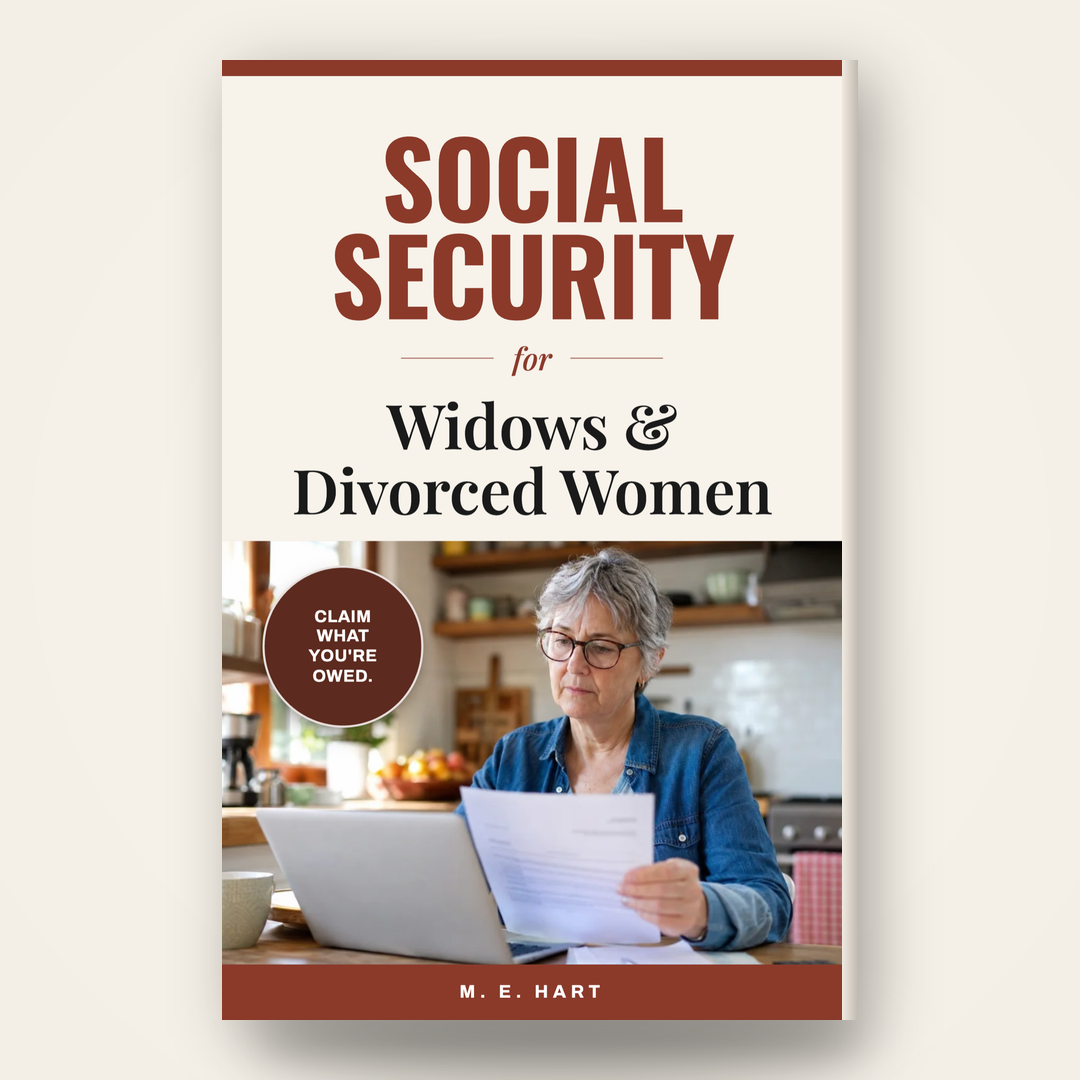
Social Security for Widows & Divorced Women
- ✓Why the benefit you take first may not be the one you keep
- ✓Widowed: what you're entitled to at each age, and when
- ✓Divorced: the 10-year line, the 2-year rule, and your ex
- ✓Word-for-word questions to ask, and what to write down
- ✓Five fill-in worksheets, and what actually gets taxed
One paperback. Free US shipping.
You Will Not Find all of this info easily
Could save people a lot of money if they know what to look for
This book is a roadmap. The examples are easy to follow.

Written by
M. E. Hart
Retired product leader with a career in healthcare and insurance.
She spent years translating complicated systems, paperwork and decisions into consumer experiences people could actually use. Retirement In Order applies that same approach to aging, retirement and getting important affairs organized.
The audit
The order you claim in can be worth tens of thousands of dollars. Nobody at the office is required to map it for you.
Social Security's own inspector general audited how widows and widowers were paid, then priced what claiming in a different order would have been worth to one group of them.
That decision is the one this book is built around — worked on your own figures, with a worksheet to check SSA's number against your record.
SSA Office of the Inspector General · April 2026
- ~$21,000eachThe estimate for 5,367 widow(er)s, $113.8 million in all
The inspector general estimated what these beneficiaries could have received had they claimed in a different order. It could not determine whether that choice was ever explained to them. Your own numbers will be different.
SSA Office of the Inspector General, “SSA Needs to Take Steps to Ensure Widow(er)s Are Appropriately Paid and Well-Informed Regarding Benefit Options,” released April 23, 2026.
The mistake no one warned you about
No one hands you a manual the week your husband dies — or the day the divorce is final
In April 2026, Social Security's own inspector general found that 5,367 widows could have received $113.8 million more — roughly $21,000 each — simply by claiming their benefits in a smarter order. Nobody at the office is required to map that order for you. This book does, in plain English.
It's written for two women the system keeps failing: the widow who doesn't know she can take one check now and switch to a bigger one later, and the divorced woman who never claims on her ex's record because she believes it would cut his check, or come out of his wife's. It wouldn't, and it doesn't — and this book shows you exactly what you're entitled to, at what ages, and in what order.
From the author
Watch the 2-minute overview
M. E. Hart walks through the one decision that trips up most widowed and divorced women — before you file.
- ✓ What the SSA won't tell you to ask
- ✓ Why order-of-claiming can be worth thousands
- ✓ Captioned · 2 min · watch right here
Peek inside
See the actual pages
Not a description of the pages — the pages. Click any one to read it full size.
Know which door is yours
Read the audit for yourself
See where the two rulebooks split
What changes when they arrive
This is what's decided by the time you put it down — the order, on your own figures. One paperback, 132 pages, free US shipping.
Know which door is yours before you sit down with anybody
Two rulebooks, one of them yours — and which one turns on dates you already have: the marriage, the divorce, the death. The book forks there and works each side to the end.
- The 10-year line and the 2-year rule, and what remarriage changes.
- What you can claim when an ex has died.
Worksheet 1 — Which Door Am I? — and four more
Take the two benefits in the order that pays, not the order you're offered
Your survivor benefit and your own retirement benefit are separate entitlements. You can start one now and switch to the other later — the move the audit measured, worked with real numbers for a widow and for a divorced woman.
- Why survivor benefits escape the deemed-filing rule, for every birth year.
- What you're entitled to at each age, and what work and remarriage do to it.
The survivor switch, worked twice — widowed and divorced
Check SSA's number instead of accepting the first one you're given
How to verify the figure against your own earnings record, what gets taxed and what to do about it, and the word-for-word questions to ask — plus the three divorced-spouse myths, quoted from SSA so you know where you stand before you call.
- Claiming on his record won't cut his check, doesn't touch his current spouse's benefit, and doesn't need his permission.
- The whole book on one decision page, with a fill-in example for each situation.
Five fill-in worksheets — What to Ask Social Security among them
Start tonight
You can't file tonight. You can find out which rulebook is yours.
Three things from paperwork you already have. None of them needs the book open.
Find two dates: when the marriage began, and when it ended — the decree, or the death certificate. The 10-year line and the 2-year rule are both measured from them.
Pull your own benefit estimate from ssa.gov — the figure on your own earnings record, not the one you remember. The comparison needs both records, and this is the half you can get tonight.
Write down the age you'd planned to claim at, and why. If the answer is “as soon as I'm allowed”, the order question hasn't been asked yet.
Fifteen minutes, and you know which door is yours and what your own record says — the two things every worksheet in the book starts from.
Get the order right before you file.
One paperback. Free US shipping.
What readers say
Every review we have is below — nothing is filtered out.
“You Will Not Find all of this info easily on the Social Security website.”
Social Security for Widows and Divorced Women by M. E. Hart is basically a guide for widowed or divorced women to plan for the most in social security benefits. Though it says women, widowers would benefit to know this information. It is hard to get information from social security because they are often only partially knowledgeable themselves. They make mistakes in math and do not realize there is any other way to receive benefits. Even though we try to understand government guidelines it is hard when you are mourning. I suggest purchasing this book if you are thinking divorce or have warning about pending death of a spouse. Then you can peruse the rules put forth and have a plan that will benefit you financially. The book is set up so that you can skip parts that do not pertain to you and for quick reference. Do you take your own benefits? Or Do you take a spouses benefit or a former spouses' benefits? When are you eligible? Which one is the best for your situation and can you change your mind later and receive a larger benefit. These questions are all answered and timely as of 2026 and will be available when you need them.
M., verified reader · Aug 2026
“Vital info”
This book was a great, quick read, but one that holds vital information for women navigating the social security landscape as a surviving spouse (widow) or as a divorcee. One thing I wish, though, as it would've made for easier navigation between chapters that didn't apply to the widow (versus divorce, as these parts were intentionally separated by the penning author) is that the Table of Contents showed corresponding page numbers for each chapter. There are some genuinely vital details that every woman in these categories should know, from deciding when to file to maximize the benefits (their own + their late husband's), to setting up your SSA.gov account in advance online to track your own earnings, and to double checking SSA's calculations. In an audit, a huge percentage of widows weren't paid survivor benefits in the amount they were owed! The author also shares hypothetical scenarios as an example in each part—for widow and divorcee alike. It's a short book, but again, one packed full of vital information.
Alexa, verified reader · Jul 2026
“Great Resource”
This book was really helpful and it explain everything in a way thats easy to understand. I learned a lot of things I didnt know about Social Security benefits for widows and divorced women. The information was clear, easy to follow, and could save people a lot of money if they know what to look for. I definately recommend this book to anyone going through this situation because it answers a lot of important questions and makes a confusing process much easier to understand.
Devon, verified reader · Jul 2026
Read all 7 reviewsHide reviews
“SSA help for Widows & Divorced Women”
This book offers clear explanations and examples to help the reader find the right social security benefit for them. There is a lot of information that needs to be addressed and some may or may not apply to the reader. This book is a roadmap. The examples are easy to follow. The book includes worksheets in the Appendix which will be extremely helpful.
Reina, verified reader · Jul 2026
“Social Security”
Tells elders and people who are getting older how to deal with social security and possibly debt after dealing with a lost one, if you or a loved ones social security is not up to date or fine with no issues then you shouldn't leave any problems for your family
Arii, verified reader · Jul 2026
“Super helpful!”
This breaks down everything you need to know! It covers things like which benefits you should look into, what order to claim them in, and when; which is super important when trying to save money. Worth the read!
Whitney, verified reader · Jul 2026
“Social security information.”
The information is very informative and gives us the knowledge of what social security can provide. I noticed that some information is not up to date. It could be that from the time the book was written things have changed. Still a good book to read.
Nora, verified reader · Jul 2026
Where the numbers come from
SSA's own rules and SSA's own audit, not a forum thread.
Every survivor and divorced-spouse rule in this book is cited to the body that sets it, on the page where it's used — and every figure was verified against SSA, the IRS and the inspector general's report in 2026. These rules move; the book tells you where to confirm the current one before you file.
- Social SecurityWho qualifies on whose record, and at what age
- SSA Inspector GeneralAudits of how widows are paid and informed
- IRSHow much of a benefit is taxed, and when
Good to know
Common questions
How much Social Security does a widow get?
A survivor benefit can be as much as the full benefit your husband was receiving, but the age you claim at reduces it — and the order you take your own benefit and the survivor benefit in changes the lifetime total more than either decision alone. SSA's own inspector general found 5,367 widows who could have received about $21,000 more each, not because they were owed something extra, but because they claimed the two benefits in the wrong order.
When should a widow switch from her own benefit to the survivor benefit?
That switch is the decision this book is built around: start one benefit now, let the other keep growing, then switch. Which one goes first depends on your age, your own earnings record, and what you are still earning. A fill-in Benefit Comparison worksheet and the "Which Door Am I?" page walk you to the answer for your situation instead of the average one.
Can I claim Social Security on my ex-husband's record?
You may be able to — if the marriage lasted at least 10 years, you are unmarried now, you are 62 or older, and the benefit on his record would be more than your own. If he hasn't claimed yet, he needs to be 62 and you need to have been divorced at least two years. And no to the two things women ask next: it does not reduce his benefit, and it does not touch his current spouse's benefit. The book quotes SSA directly on both so you know where you stand before you call.
What's actually in the book?
The survivor "switch" strategy (take one check now, switch to the bigger one later), exactly what a widow is entitled to and at what ages, the divorced-spouse rules in plain English, what you can claim when an ex has died, how to verify SSA's own figure, and what gets taxed. It includes five fill-in worksheets: Which Door Am I?, Benefit Comparison, What to Ask Social Security, a Document Checklist, and My Key Dates.
Is the information current for 2026?
Yes — every dollar figure, age threshold, and rule was verified against SSA, IRS, and the SSA inspector general's primary sources in 2026, including the deemed-filing birth-year cutoff and the Social Security Fairness Act. Because these rules change, treat it as an educational guide and confirm current figures at SSA.gov before you file.
Is this financial or tax advice?
No. It's an educational guide written to help you understand your options and ask better questions — not financial, tax, or legal advice. Confirm your situation with SSA (1-800-772-1213) and consider a fee-only fiduciary. It's published under the pen name M. E. Hart as part of the Retirement In Order series.
Is this the right book for me?
It's the right book if you're widowed or divorced and can't get a straight answer about which benefit to take first — the survivor switch, the 10-year marriage line, the 2-year rule after a divorce. It's the wrong book if you're married and planning a joint claiming strategy, or if what you want is investment advice; neither is in here. Widowers: the rules read the same, and so does the book, despite the title.
What if it isn't right for me?
Each book is printed for you one copy at a time. If your parcel turns up damaged or misprinted, send a photo within 30 days and we ship a replacement free — you keep the flawed copy. Because every copy is made to order, we can't take a book back once it has shipped. Contact details are at the bottom of this page.
Your next step
Get the order right before you file.
Which door is yours, what each pays at each age, and which check to take first.
The survivor switch and the divorced-spouse rules in plain English, what you're owed at each age, and the worksheet to check SSA's figure against your own record. One paperback, posted to you.
What the money buys against isn't a book. It's a filing decision made once, on the office's suggestion, by somebody who never heard there was an order to it.
One paperback. Free US shipping.
Free Tool
Not sure which door is yours?
Use our free "Which Benefit, When?" flowchart to see, in a few taps, which Social Security benefit you should claim first — widow, divorced-spouse, or your own — based on SSA's own rules. Then this book walks you through the strategy in depth.
Open the free flowchart →More free tools: Medicare Enrollment Calendar · Senior Discounts · Brain Games
You may also be interested in


Start getting retirement in order — one simple checklist at a time
Free quick-start checklists to help you organize the practical parts of retirement: what to gather, what to decide, and what to write down first.
- What to gather
- What to update
- What to share with family
Almost there — check your inbox.
We just sent a confirmation email. Click the link inside and your free download lands right after. (If you don't see it, check spam or promotions.)
 Social Security for Widows & Divorced Women$25.99Paperback
$25.99Paperback
Social Security for Widows & Divorced Women$25.99Paperback
$25.99Paperback
