Paperback
Most of what they'll need isn't in the will. It's still in your head.
The dying is not the problem. The figuring-out is, and most of it can be settled over a few evenings by somebody who knows which parts actually matter.
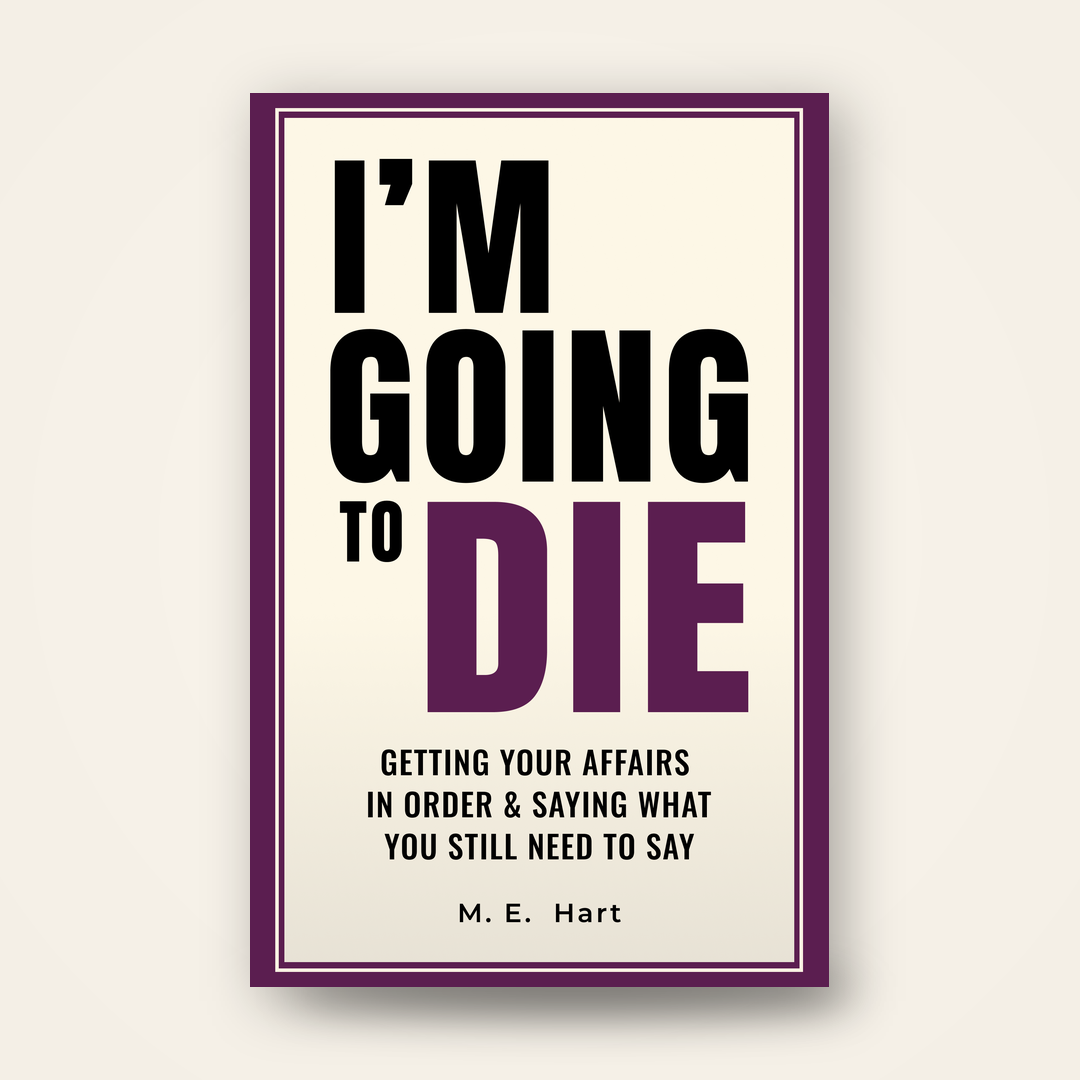
I'm Going to Die: Getting Your Affairs in Order
- ✓The people you appoint — and whether you have actually asked them
- ✓The money a will never touches, and where it really goes
- ✓The phone, the email and the photographs nobody else can reach
- ✓The letter, the conversations, and the things only you know
One paperback. Free US shipping.
I don't want my daughters … to guess their way through our accounts
As someone with a dying parent … great for me to know what to do
The author took a very uncomfortable topic and made it approachable

Written by
M. E. Hart
Retired product and customer experience leader with a career in healthcare and insurance.
She spent years translating complicated systems, paperwork and decisions into consumer experiences people could actually use. Retirement In Order applies that same approach to aging, retirement and getting important affairs organized.
Try this first
Five answers nobody will find in your will.
A will settles who gets what. These are the questions it was never built to answer, and somebody will be asking them within the week.
- Have the people you've named actually said yes?
- Which accounts carry a beneficiary form that outranks the will?
- Who can open your phone, and the photographs on it?
- What do you know that nobody else does?
- Who decides if you're still here but can't?
If any of them made you pause, that's the one somebody else will be guessing at.
What deciding now changes
| Left to them | Decided by you |
|---|---|
| Someone finds out they were named when the call comes | A person who said yes, and knows what they said yes to |
| A beneficiary form from years ago overrides the will | Each account's form read against what you actually meant |
| A locked phone, and the photographs locked with it | One person who can open it, arranged while you could still set it up |
| The things only you knew, gone with you | A letter written, and the conversation you kept putting off, had |
| A hospital asks whoever's in the room | The person you chose, on paper, before anyone's in the room |
Whichever one you paused on is what this book is for.
Why it matters
The problem is not the dying. It is what nobody wrote down.
A bank will not tell your family which accounts exist. An insurer will not call to say there is a policy. The phone in your pocket holds the photographs, the two-factor codes and half the logins, and nobody else can open it. None of that is a legal problem. It is a knowledge problem, and it only has a solution while you are still here to supply it.
So this book finds the relatively small number of things that would cause the biggest trouble, and handles those. Who you appoint, and whether you have asked them. The money a will never touches. The house, the car, and who can physically get in. The pets. How much of a funeral there is any point planning. The objects people fight over, the conversations that keep being postponed, and the things only you know.
Then it stops, so you can. Sixteen chapters in four parts, 148 pages — and where an attorney, a tax professional or your insurer is genuinely the right answer, it says so, says why, hands you the questions worth asking, and gets out of the way.
From the author
Watch: a book to read, not a binder to fill in
Most books about this hand you a binder full of blanks. M. E. Hart on what to do instead — the phone nobody else can open, the account nobody is authorized to reach, and the person you named to handle things but never actually asked.
- ✓ Why an inventory of your life is not the job
- ✓ The phone, the account, the house — and the person you never asked
- ✓ Captioned · 28 sec · watch right here
Peek inside
See the actual pages
Five chapter openings, as printed. Swipe through, and tap any one to read it full size.
What changes when it arrives
Here's what's settled by the time you close it — decided and said out loud, not filed. One paperback, 148 pages, free US shipping.
The people you've named know it, and said yes
Who you'd appoint and why, asked out loud while it's a conversation and not a phone call — and who decides for you if you're still here but can't.
- Who would have to start guessing, and about what.
- Pick the people first, then actually ask them.
Opens on the people, before any paperwork
The money goes where you meant, not where an old form says
Named beneficiaries outrank the will and usually hold more of the money, so each form gets read against what you actually intend — and the accounts get simpler now instead of untangled later.
- The house, the car, and who has a key.
- Simplify the accounts now, or somebody untangles them later.
The money a will never touches
Nothing that mattered leaves with you
The phone somebody can open, the objects nobody should have to fight over, the letter written and the conversation you kept putting off, had — then a handoff that takes thirty minutes a year to keep true.
- The device nobody else can open, and the photographs on it.
- When an attorney is genuinely the right answer, and what to ask once you're there.
The phone, the letter, and the handoff
Start tonight
None of this needs the book open. Start before it arrives.
Three things you can do this evening, before the parcel comes. None of them is paperwork.
The person you'd name
Text the person you'd name to handle things, and ask. Not “would you,” but “will you.” If you can't send it, you've found chapter one.
The beneficiary line
Log in to your largest retirement account and read the beneficiary line. If it names an ex, a parent who's gone, or nobody, that form outranks your will.
Who can open your phone
Decide who should be able to open your phone, and tell them where you'll keep the way in. The photographs are on it, and so are half the logins.
Three conversations, and the biggest guesses are already off the table. The book is what makes the rest of the list short.
Decide the few things that matter,
then go live your life.
One paperback. Free US shipping.
What readers say
Every review we have is below — nothing is filtered out.
“Practical without being morbid”
After going through my mom's belongings when she passed, I'm more aware of how much work gets left for the people you love. I don't want my daughters someday to guess their way through our accounts, documents, digital life, or even the things that mattered to us. I liked that this book focuses on handling the few things that could cause big problems rather than turning it into one enormous project. It's practical and thoughtful without making the whole subject feel depressing.
K., verified reader · Sep 2026
“A book for someone suddenly thrown into handling someone's affairs”
As someone with a dying parent, I think this was great for me to know what to do. Sometimes having a whole list of things to do beforehand is overwhelming. I liked how this book explained reasons for the overwhelm and validation for what I felt. I wish there was a korean version of this book for my parents to read. I feel like this explains things well without shaming the person who hasn't gotten their affairs in order. It would be a good counterpart to a practical list of things to do when getting someone's affairs in order. I loved how it didn't blame anyone but rather empathized with every type of person that reacts when handed this type of responsibility.
Boebin, verified reader · Sep 2026
“A Practical Guide to Leaving Things Clear”
What I appreciate about this book is how it makes end-of-life planning feel much less overwhelming. Instead of turning the process into a complicated legal or financial project, it focuses on the everyday details that can create real problems for loved ones, from digital accounts and access to important belongings and personal wishes. I also like the emphasis on having conversations and making sure the right people actually know what to do. It sounds like a short, practical read for anyone who wants to make things easier for their family without getting buried in paperwork.
Theresa, verified reader · Sep 2026
Read all 6 reviewsHide reviews
“Great resource”
This is great!! I work with clients and will be recommending this book so they can make sure their family has info for their affairs after they are gone. Highly recommended.
Verified reader · Sep 2026
“Get your affairs in order”
Great book, underlines details that are most forgotten before passing that grieving families are left to sort.
Emily, verified reader · Oct 2026
“Well written”
I loved how the author took a very uncomfortable topic and made it approachable
Brianna, verified reader · Sep 2026
Where it sends you elsewhere
It says when to call a lawyer, and which office decides what.
This is a book to read, not legal advice. Where a rule belongs to an agency, the chapter names it and tells you what to ask; where the honest answer is “see an attorney,” it says so and hands you the questions to bring. It rules on no trusts, no probate, no estate tax and no state's tables — those are theirs to give.
- Social SecurityWho can claim survivor benefits
- Your state's probate courtWhat a will has to go through, and how long it takes
- Your bank or plan administratorWhose name is on the beneficiary form
- Apple and GoogleWho may open a device after its owner dies
Good to know
Common questions
Is this a fill-in planner?
No, and that is the point of it. There are no blanks, no boxes and no forms — it is sixteen chapters you read, each one landing on something small enough to do this week. If you want the fill-in half as well, The Ultimate End of Life Planner is the companion, and the two are sold together as a bundle.
How do I get my affairs in order?
Start with the people rather than the paperwork: who would act for you if you could not, who would settle things afterwards, and whether you have actually asked either of them. Then handle the things that cause the most trouble for the least effort — the accounts whose named beneficiaries outrank your will, the phone nobody else can open, and the house or car somebody has to be able to get into. That is a few evenings' work, not a six-month project, which is the part most people have backwards.
Do I need a will first?
No, and the order matters less than people think. A will decides who inherits what, and it does not touch retirement accounts, life insurance or anything else with a named beneficiary — which is often most of the money. Chapter 3 is about that gap specifically, so reading it before you see an attorney tends to make the appointment shorter.
Is this legal advice?
No. It is educational, and it is deliberately not a legal textbook: there is no trust, probate, estate tax or state-by-state material in it. Where an attorney, a tax professional or your insurer is genuinely the right answer, it says so, says why, and hands you the questions worth asking before you go.
Is it depressing to read?
It is candid rather than grim. The title says the thing out loud so the rest of the book does not have to keep circling it, and the last chapter is about how little upkeep any of this needs once it is done — thirty minutes a year. The reading turns out to be the easiest part of a job most people have been dreading for years.
Who is it not for?
Anyone who wants a binder to fill in: this has no blanks, boxes or forms, and the companion planner is the product for that. And anyone who wants estate law — there are no trusts, no probate, no estate tax and no state-by-state tables in it, by design.
How long is it, and how fast does it arrive?
148 pages, sixteen chapters, four parts — a few evenings. The paperback is printed when you order and posted with free US shipping; delivery runs about two weeks, which is the printer's schedule rather than ours.
What if it isn't right for me?
Each book is printed for you one copy at a time. If your parcel turns up damaged or misprinted, send a photo within 30 days and we ship a replacement free — you keep the flawed copy. Because every copy is made to order, we can't take a book back once it has shipped. Contact details are at the bottom of this page.
Your next step
Decide it now, while it's yours to decide.
Sixteen chapters, and one thing to do at the end of each.
The people asked, the beneficiary forms read, the phone openable, the letter written — settled over a few evenings and then left alone. One paperback, posted to you.
What the money buys isn't a book. It's the short list of things your family won't have to guess.
One paperback. Free US shipping.
You may also be interested in


Start getting retirement in order — one simple checklist at a time
Free quick-start checklists to help you organize the practical parts of retirement: what to gather, what to decide, and what to write down first.
- What to gather
- What to update
- What to share with family
Almost there — check your inbox.
We just sent a confirmation email. Click the link inside and your free download lands right after. (If you don't see it, check spam or promotions.)
 I'm Going to Die$25.99Paperback
$25.99Paperback
I'm Going to Die$25.99Paperback
$25.99Paperback
